Women’s History Month: A Legacy Still Being Written
Women’s History Month is a celebration of legacy—but it is also a reminder that legacy is not only something we inherit. It is something we build.
The WOCEC stands with women who refused to accept the limitations placed upon them. Women who led movements, shaped policy, transformed classrooms, and redefined what leadership looks like. But we also stand in the present—supporting the women who are leading right now, often under immense pressure and scrutiny.
Women of color in leadership roles, especially in K–12 systems, are often the first, the few, or the only in their districts. They navigate microaggressions, isolation, and the pressure to outperform while representing entire communities. The emotional tax is real. The stakes are high. And the cost of navigating these systems alone is unsustainable.
Research consistently shows that when women of color lead, school climates improve, educator diversity increases, and students—especially students of color—experience stronger outcomes. Yet too often, these leaders are pushed out, undermined, or unsupported.
The WOCEC is committed to changing the conditions that make belonging conditional. WOCEC creates spaces where women of color do not have to lead alone. Through executive coaching, peer‑to‑peer summits, mentorship, and wellness‑centered professional learning, we cultivate environments where leaders can exhale, reflect, and rebuild.
Our work is not about helping women “fit in.” It is about transforming systems so that women of color can lead without shrinking, code‑switching, or carrying the burden of being the only one in the room.
This Women’s History Month, we honor the women who came before us. We also honor the women leading today—the superintendents, principals, district leaders, scholars, teachers, and community advocates who are shaping the future of education. And we stand in the future—investing in the next generation of women of color who will lead school systems, research institutions, nonprofits, and communities with courage and clarity.
The WOCEC invites partners, allies, and institutions to join us in this work. Because when women of color rise, entire systems rise with us.
Grant Thornton’s Women in Business 2026: The Value of Visibility

Published this month, the Grant Thornton Women in Business 2026 report finds that progress toward gender equity in business leadership is uneven and, in some cases, reversing, even as its importance grows. Women’s representation in senior leadership roles has recently declined in some regions (n the US from 35% to 31%), and global gains remain slow. At the same time, the report underscores a strong business case for gender diversity: companies with more balanced leadership teams are more likely to report stronger revenue growth, better workforce outcomes, improved decision-making, and greater innovation. It also highlights the importance of “visibility”—when women are seen in leadership, it supports talent attraction and advancement. Overall, the report argues that while evidence linking gender equity to performance is clear, many organizations are not sustaining the focus needed to achieve lasting change.
The Albert Shanker Institute’s report: The Adequacy and Fairness of State School Finance Systems
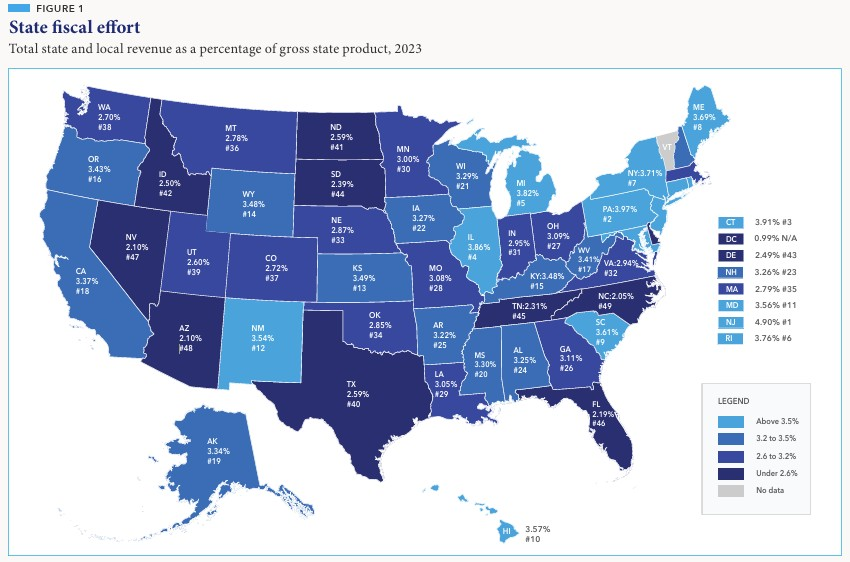
This March, the Albert Shanker Institute published its 2026 Adequacy and Fairness of State School Finance Systems report, which finds that while US states collectively invest hundreds of billions of dollars in K–12 education, funding systems remain uneven, often inadequate, and insufficiently targeted to student need. Using three core indicators—fiscal effort, funding adequacy, and equal opportunity—the report shows that many states devote a smaller share of their economic capacity to education than in the past and fail to provide enough resources for districts, particularly those serving high-poverty populations. A central finding is that how much is spent is less important than whether funding is sufficient relative to student needs, which vary significantly by context. The report emphasizes that well-designed finance systems should allocate more resources to districts facing greater challenges, yet many states fall short of this goal, limiting their ability to ensure equitable educational outcomes. Overall, the study underscores that state policy choices around funding levels and distribution are critical levers for improving both adequacy and equity in public education.